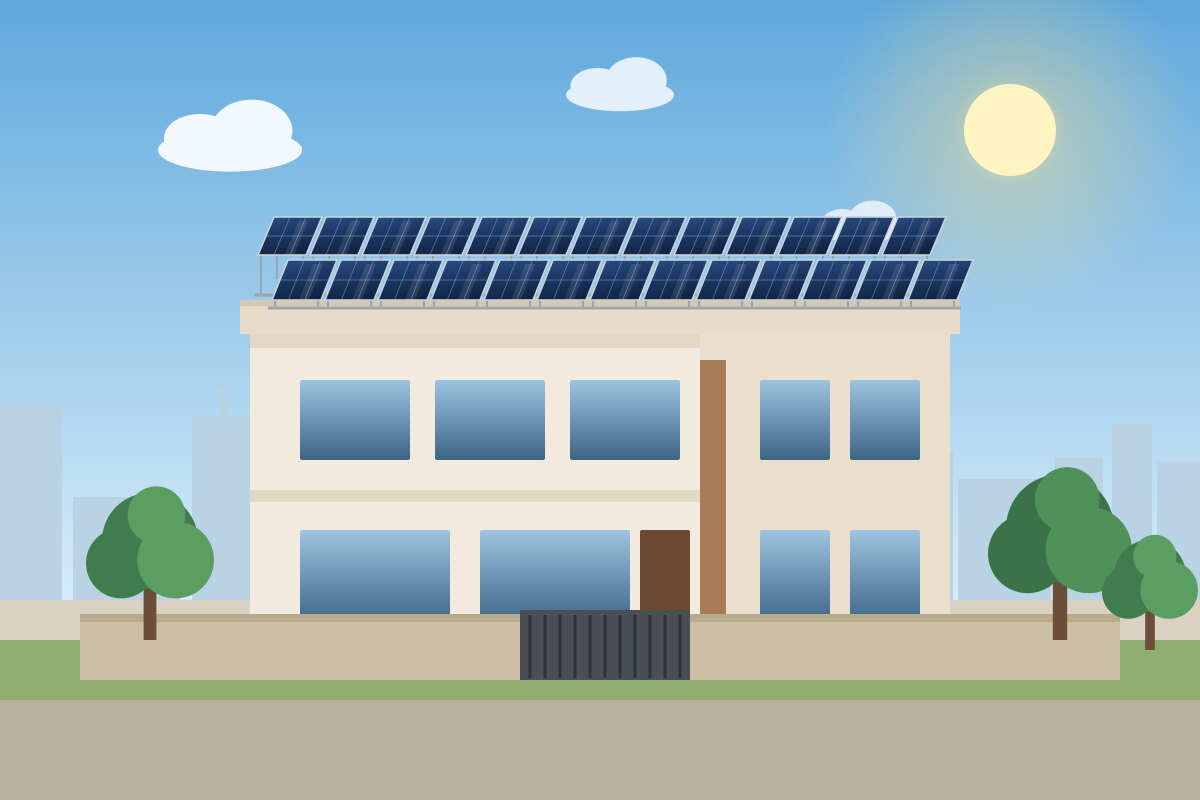
The 15kW solar system price in Pakistan sits at roughly Rs 13.5 to 16.5 lakh for a quality on grid installation in November 2026, and roughly Rs 19 to 27 lakh once you add a hybrid inverter and lithium storage. That gap is the whole story at this size. The panels cost about the same either way. What moves the number is how much of your own power you want to keep after sunset.
Alphasolar quotes 15kW systems almost every week, mostly for large homes running four or five air conditioners and for small businesses with heavy daytime loads. This guide breaks the price into its parts, shows what a 15kW system actually generates, and explains how net billing has changed the on grid versus hybrid decision.
Key Takeaways
- Indicative price: about Rs 13.5 to 16.5 lakh on grid, and Rs 19 to 27 lakh hybrid depending on battery size.
- Panels: around 25 plates in the 600 to 615 watt class.
- Generation: roughly 60 to 75 units a day on average, or 1,800 to 2,250 units a month.
- Roof space: plan for about 1,100 to 1,250 square feet of unshaded roof.
- Connection: you normally need a three phase meter and a sanctioned load of at least 15kW.
- Under net billing: every unit you use yourself is worth several times more than a unit you export.
What Is the 15kW Solar System Price in Pakistan Right Now?
The 15kW solar system price in Pakistan moves with panel import rates, the rupee and battery supply, so treat the figures below as a planning range rather than a quote. They are built from dealer panel rates of roughly Rs 41 to 45 per watt for tier 1 A grade modules in early November 2026, current inverter and lithium battery listings, and market reports that placed a complete 15kW system near Rs 14.5 lakh in mid 2026.
| Configuration | What is included | Indicative installed price |
|---|---|---|
| 15kW on grid | 25 panels, 15kW three phase on grid inverter, structure, protection, installation | Rs 13.5 to 16.5 lakh |
| 15kW hybrid, about 10kWh lithium | Hybrid three phase inverter, two 5kWh lithium modules | Rs 19 to 23 lakh |
| 15kW hybrid, about 16kWh lithium | Hybrid three phase inverter, 16kWh lithium bank | Rs 22 to 27 lakh |
Two quotes for “15kW” can differ by several lakh and both be honest. The difference usually hides in the inverter brand, the structure height and gauge, and whether protection equipment is itemised or quietly left out. Alphasolar itemises every line so you can compare like with like. Current package configurations are listed on our solar system price in Pakistan page.
Where Does the Money Go in a 15kW Quote?
Every quote behind the 15kW solar system price in Pakistan has four parts. Knowing their rough share lets you spot a quote that is cheap in the wrong place.
Solar panels
At about Rs 41 to 45 per watt, 15,000 watts of tier 1 panels costs roughly Rs 6.2 to 6.8 lakh on its own. That is close to half of an on grid system. Brand and technology matter less than documentation. Ask for A grade paperwork and serial numbers, and read our guide on used and B grade solar panels before accepting a price that looks too good. Our solar panels range lists the modules we install.
Inverter
A 15kW system needs a three phase inverter. On grid models are simpler and cheaper. Hybrid models add battery management and backup output, and they cost noticeably more. The inverter is also the component most likely to need attention during the system’s life, which is why we wrote about the part that fails first. Compare brands on our solar inverters page.
Structure, cabling and protection
The elevated structure, DC and AC cabling, breakers, surge protection and earthing usually account for 15 to 20 percent of the price. This is where cheap quotes cut corners, and it is also what inspectors check most closely. Our article on solar mounting structures explains why the frame deserves real steel.
Batteries, if you choose hybrid
Lithium storage is the swing factor. A 5kWh lithium module typically lists between Rs 1.95 and 3.5 lakh depending on brand, and 16kWh units have been selling for roughly Rs 5.75 to 6.8 lakh. See lithium battery price in Pakistan and our explainer on 12V, 24V and 48V batteries before choosing a bank.
How Many Units Does a 15kW Solar System Produce?
In most Pakistani cities, 15kW solar system units per day average about 60 to 75 across the year for a well installed system. That works out to roughly 1,800 to 2,250 units a month. Spring and summer days run higher, and foggy Punjab winter days can drop to around 45 to 52 units.
Those figures assume clean panels, a sensible tilt and no shading after 9am. Dust alone can quietly remove a tenth of your output, which is why we recommend reading our guide to solar panel cleaning and maintenance. For a city by city and season by season breakdown, see our new guide to solar system units per day in Pakistan. Winter readers should also look at solar output in a Punjab winter.
Is 15kW the Right Size for You?
A 15kW system suits homes and businesses consuming roughly 1,700 to 2,300 units a month, especially where much of that load runs in daylight. Typical buyers include large houses with four or five inverter air conditioners, clinics, schools and small offices.
Three practical checks decide whether 15kW is even possible on your property:
- Sanctioned load. Your meter must be sanctioned for at least 15kW. If it is not, a load extension comes first, with its own fee and wait.
- Three phase supply. A system this size is connected on three phase. Single phase consumers need an upgrade.
- Roof area. You need roughly 1,100 to 1,250 square feet of unshaded roof, laid out so the panels can be wired in sensible strings.
If you use closer to 1,200 to 1,500 units, a 10kW system is usually the better fit, and our 10kW solar system price in Pakistan page covers it. If you are not sure, the solar calculator gives a quick starting point.
On Grid or Hybrid: Which Makes Sense at 15kW Under Net Billing?
The rules changed in February 2026. NEPRA‘s Prosumer Regulations replaced unit for unit net metering with net billing for new applicants. Exported units are now credited at a buyback rate tied to the national average power purchase price, widely reported at around Rs 11 per unit, while the units you import are still charged at your full retail tariff. Our article on net metering to net billing in Pakistan explains who is still protected.
That changes the maths. A unit you generate and use yourself saves you the full tariff. A unit you export earns a fraction of that. So the question is no longer how much you can generate, but how much you can use while you generate it.
When on grid still wins
A 15kW on grid solar system is the better value if most of your consumption already happens in daylight, such as offices, shops, clinics and homes that run air conditioning through the afternoon. You keep the lowest upfront cost, the simplest maintenance and the fastest payback.
When hybrid earns its premium
The 15kW hybrid solar system price is higher, but hybrid makes sense when evenings are your heaviest period, when load shedding hurts your business, or when you want air conditioners and pumps running through outages. The battery stores midday surplus for evening use instead of selling it cheaply. Size the battery from a written list of loads you need at night, not from the panel capacity. Our on grid solar system page and lithium battery price guide cover both routes.
How Long Does a 15kW System Take to Pay Back?
Here is a simple, illustrative example. Your own tariff, consumption pattern and export share will differ, so treat it as a method rather than a promise.
| Assumption | Value |
|---|---|
| Monthly generation | 2,000 units |
| Share used directly on site | 60 percent, 1,200 units |
| Value of self used units at Rs 40 | Rs 48,000 |
| Exported units at about Rs 11 | 800 units, Rs 8,800 |
| Approximate monthly benefit | Rs 56,800 |
On those assumptions an on grid system costing around Rs 15 lakh returns its cost in a little over two years. Raise self consumption and the payback shortens. Export more and it lengthens. A hybrid system takes longer to pay back, but it buys resilience that a generator would otherwise provide. If you would rather spread the cost, see our solar financing options.
What Should You Check Before Signing a 15kW Quote?
- The sanctioned load and phase on your bill match the system size.
- The inverter appears on the approved equipment list with anti islanding protection.
- DC and AC protection, earthing and surge devices are listed as separate lines.
- Panel serial numbers and A grade documentation are provided.
- Monitoring is registered in your name, not the installer’s.
- Warranty handling and service are clear. Our inverter replacement and after sales service page explains how we support systems after handover.
Fire risk is rarely priced into cheap quotes, so read our note on solar fire safety as well.
How Alphasolar Designs and Installs a 15kW System
Every 15kW project starts with a site survey: roof measurements, shading, load and phase checks, and a review of 12 months of bills. From that we design an on grid or hybrid system, prepare the net billing file and install to inspection standard the first time. For larger or unusual properties, our solar system design and consultancy team handles the engineering. Our solar services page lists everything included.
Ready to see the 15kW solar system price in Pakistan for your own roof? Get a free quote from Alphasolar and share a recent electricity bill. If your usage is heading higher, our 50kW system guide explains how costs change as systems grow.
Frequently Asked Questions
What is the price of a 15kW solar system in Pakistan in 2026?
As of November 2026, a quality 15kW on grid system costs roughly Rs 13.5 to 16.5 lakh installed. A 15kW hybrid system with lithium storage costs roughly Rs 19 to 27 lakh, depending mainly on battery size and inverter brand. Prices change with panel import rates, so confirm with a current quote.
How many solar panels are needed for a 15kW system?
About 25 panels in the 600 to 615 watt class. With smaller 585 watt panels you would need around 26.
How many units does a 15kW solar system produce per day?
Roughly 60 to 75 units a day averaged over the year in most Pakistani cities, or about 1,800 to 2,250 units a month. Output is higher in spring and summer and lower on foggy winter days.
Can a 15kW solar system run air conditioners?
Yes. A 15kW system can typically run four to five inverter air conditioners during sunny hours alongside normal household loads. Running them at night requires a hybrid system with enough battery capacity.
Do I need a three phase connection for a 15kW solar system?
In practice yes. Systems of this size are connected on three phase, and your sanctioned load must be at least 15kW before your distribution company will approve a net billing connection.