
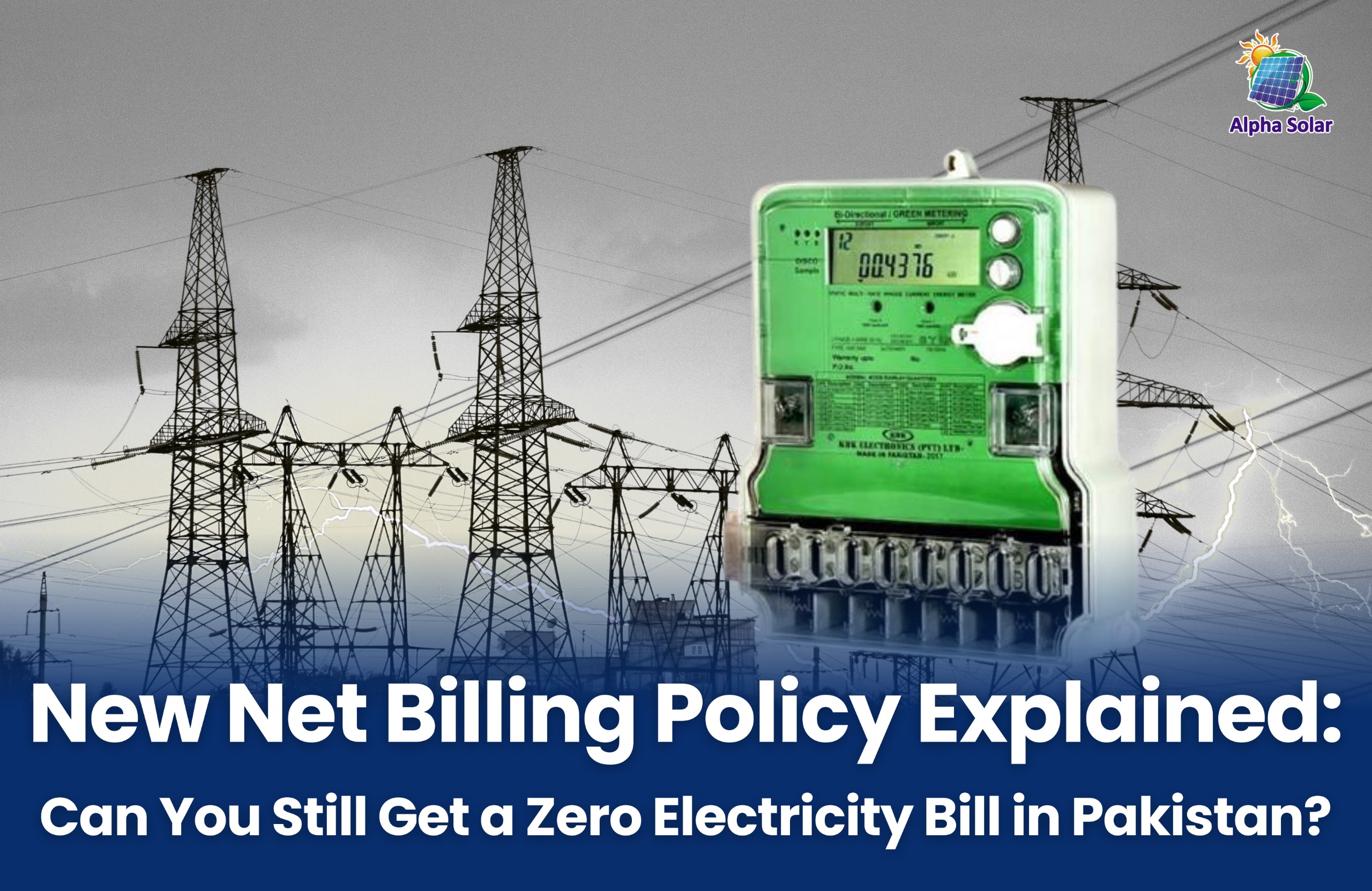
On February 10, 2026, the National Electric Power Regulatory Authority (NEPRA) officially replaced the much-anticipated Net Metering policy with the new Net Billing system.
The major change that this new policy brings is how solar users are now compensated for every unit they export to the National Grid.
Under the old net metering policy, users were compensated on a unit-for-unit basis, which means every unit you exported to the national grid was worth the same as a unit you imported.
As one of pioneers solar companies and ambassadors of solar energy in Pakistan, we understand this is a bit disheartening for solar users who have paid millions to install their systems and then received their Net Metering licenses.
But it doesn’t mean you won’t save your money on electricity prices after installing a solar system in Pakistan. In fact, you can still save up to 80% on your electricity bills even without the net billing.
In this article, we will first try to understand how the new net billing system has affected both new and existing solar users and how knowing the Solar Panel Price in Pakistan can help you reap the best benefits from your solar setup.
What is the new Net Billing Policy?
Under the old Net Metering system, if you sent 10 units of electricity to the grid during the day, you could take back the same 10 units at night. It worked like an exchange. If you used more than 10 units, you only paid for the extra units. Day and night units had the same value, so there was no loss for you.
Under the new Net Billing system, things are different. If you send electricity to the grid, you do not get the same number of units back. Instead, you sell your units to the DISCO at around Rs 11 per unit. Later, when you need electricity from the grid, you buy it at normal rates. These rates are usually between Rs 35 – 60 per unit, depending on your bill slab. This means the unit you sell is much cheaper than the unit you buy.
In simple words, before this change, one unit sent was equal to one unit received. Now, one unit sent gives you Rs 11, but when you buy one unit back, you pay a much higher price.
Here is how old and new users will be treated under the new Net Billing policy in Pakistan.
For New Users
You will now buy electricity from the grid at the full retail price (roughly Rs. 55–70 per unit). However, when you sell your excess electricity back to the grid, you will be paid the National Average Energy Purchase Price (NAEPP), which is currently around Rs. 11 per unit.
For Existing Users
There is a “grandfather clause.” If you already have a valid net metering license (issued before Feb 9, 2026), your 1-to-1 unit benefits are protected until your current contract expires (usually 7 years from the date of issuance).
The 5-Year Rule
New contracts are now for 5 years instead of 7. Also, you can’t install a system bigger than your sanctioned load anymore. They want to make sure the local transformers don’t get overloaded (the 80% capacity rule).
What is the actual difference? (Net Metering vs. Net Billing)
Let’s understand it with a real-life example.
Net Metering was like a barter system. If you gave the grid 10 units during the day, you could take 10 units back at night. You’re only charged for the units you consume more than 10.
Now the Net Billing is like a commercial transaction. Which means you will now be selling your solar-generated electricity to the grid at a wholesale price (Rs. 11).
But when you need them back at night, you have to buy them at the retail price (Rs35-. 60) depending on your slab.
You aren’t swapping units anymore; you are selling cheap and buying expensive. This is why using your own solar power while it’s being generated is now more important than ever.
Is Net Billing helpful for solar users in Pakistan?
If you’re asking if you can still make a profit by selling power, the answer is: not really. But if you’re asking if solar is still the best way to save thousands of rupees on your bills every month, the answer is 100%. Yes.
The effectiveness of solar now depends on how much of the solar-generated energy you utilize at home.
Because the electricity prices are already very high and expected to increase in the near future. So if every unit you produce and consume yourself saves you up to the Rs. 60+ price.
Will the new Net Billing policy affect the benefits of installing a solar system?
Honestly, it’s a minor setback. The payback period (the time it takes for the system to pay for itself) might go from 2.5 years to maybe 3.5 or 4 years.
But look at the bigger picture: a solar system lasts for 25 years. Even if it takes one extra year to pay off, you still get 21 years of nearly free electricity. In a country where petrol and electricity prices change every month, solar is the only thing that gives you a fixed price for your life.
How to save up to 80% on your bills even without Net Billing in Pakistan?
Many people are thinking solar isn’t worth it anymore, but that’s not true. You just need to change your approach. Here is how you can still slash your bills by 80%:
1. Match Your System to Your Load
The first step is to install a solar system that perfectly matches your monthly load. In the past, people would “oversize” their systems just to make money from the grid. Now, that doesn’t make sense. By sizing your system correctly, you first reduce your initial installation cost, and second, you won’t have to worry about selling a huge amount of power back to the grid for a low price. The goal is to produce exactly what you need.
2. Install a Hybrid Solar System with Lithium-Ion Battery
This is the real game-changer for 2026. If you install a Hybrid System with batteries, you can save the extra electricity your panels generate during the day instead of sending it to WAPDA for Rs. 11.
By considering the Lithium Battery Price in Pakistan, you can store enough power to run your home for the major part of the night. This means you won’t have to buy expensive electricity from the grid when the sun goes down. By relying on your own stored power, you bypass the “buy high, sell low” trap of net billing and keep your savings in your own pocket.
Frequently Asked Questions (FAQs)
1. Is my old Net Metering license still valid?
Yes! If you already have a license, you are grandfathered in. This means you will keep your 1-to-1 unit benefits until your current agreement expires (usually 7 years from the date it was issued). After that, you will move to the new Net Billing rates.
2. Why is the buyback rate (Rs. 11) so much lower than the import rate (Rs. 60)?
NEPRA has set this based on the National Average Energy Purchase Price. They argue that the grid is not a free battery and that solar users should be paid the same rate as a large power plant. It’s a shift to protect the grid’s financial stability, but it means you should focus on self-consumption.
3. Do I need a NEPRA license for a small 3kW or 5kW system?
For any system that connects to the grid (Net Billing), you still need to follow DISCO’s application process. However, for systems under 25kW, the process is much simpler than it used to be. You still need an approved inverter and a green meter to legally sell back.
4. Can I still get a Zero Bill with Net Billing?
It is much harder now because you’d have to export about 5–6 units just to cancel out 1 unit you buy at night. The new way to get a zero bill isn’t by exporting more; it’s by adding batteries so you don’t have to buy anything from the grid at night.
Speak to an Expert
To get your solar system installation by the top experts at the best rates, call the number below or visit our office for a free consultation and site survey
Contact: 0343-3813810
Email: [email protected]

Leave A Comment