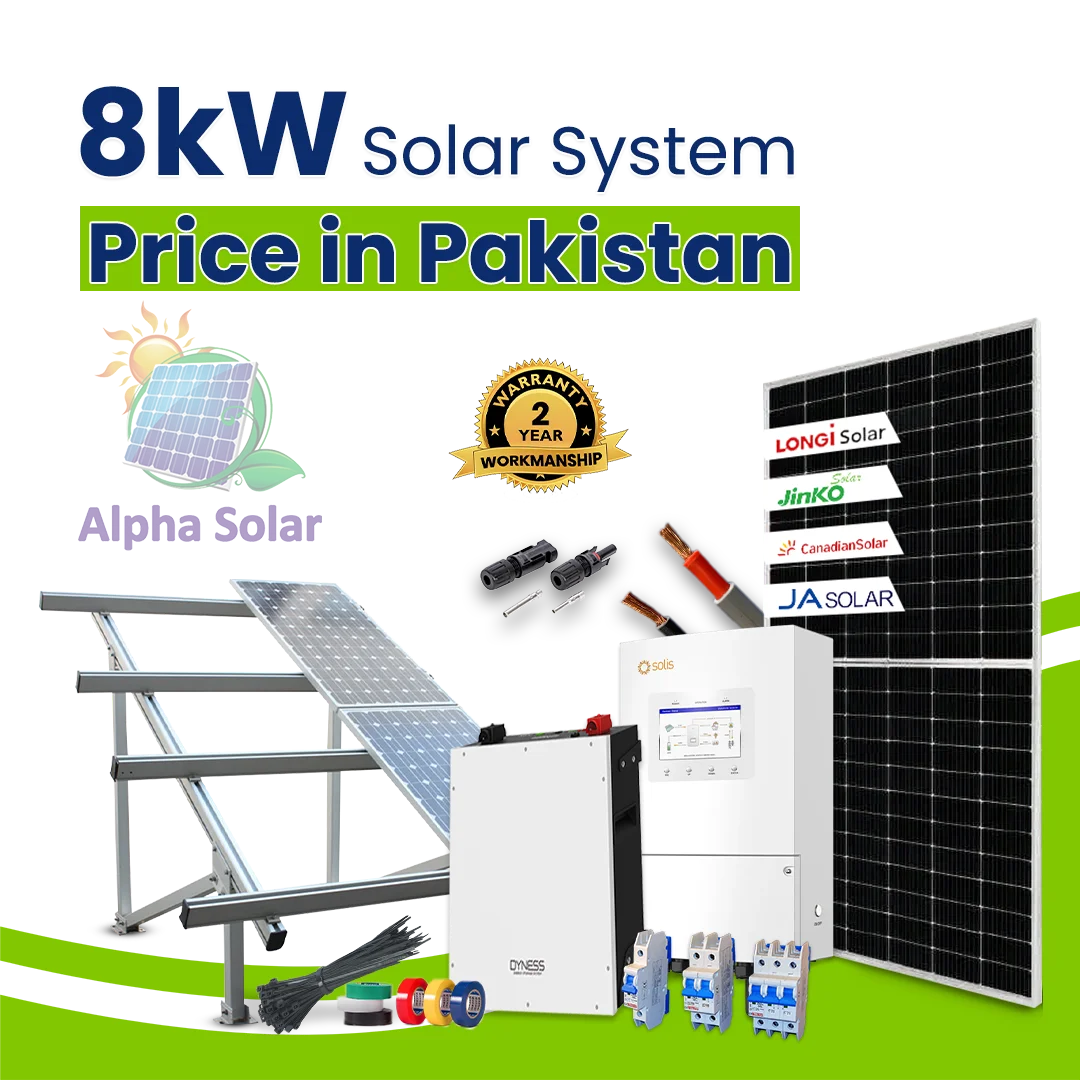
8kW Solar System Price in Pakistan
If you’ve heard that solar is no longer worth it because of the new Net Billing policy, you’ve been told half-truths. Yes, NEPRA now buys your excess electricity for roughly Rs. 11–13, while charging you Rs. 50–60 at night. The old 1-for-1 exchange is dead.
But this doesn’t mean the system is no longer profitable. In fact, this has made the 8kW system more relevant than ever. Instead of installing a large and costly 15kW system to sell power to the grid, the 8kW is a perfect solution for self-consumption. It’s the perfect size to run your home during the day and, with a battery, keep you off the grid at night.
The momentum has shifted from selling to self-consumption, which helps people install solar systems with lower upfront costs. In today’s blog, we will see what an 8kW solar system is and how it can still help 10-marla or even 1-kanal homes save maximum on their electricity bills.
What Exactly Is an 8kW System in Pakistan?
An 8kW solar system is one that can roughly generate about 30 to 35 units of electricity every single day.
In the scorching heat of a Lahore or Multan summer, an 8kW system is just the right choice. It’s powerful enough to run three 1.5-ton inverter ACs at once without tripping your breakers, but it’s small enough to fit on your roof without needing a massive, ugly steel frame that looks like a cell tower. It’s the perfect middle ground: it does more than a basic 5kW system, but it avoids the extra taxes and costs that come with a huge 10kW setup.
How much does an 8kW Solar System Produce?
The question every Pakistani father asks first is: Will this bring my bill to zero? The answer is a nuanced Yes, but… An 8kW system will typically produce between 900 and 1,050 units a month, depending on your city’s solar harvest.
If your family consumes 1,000 units, you are technically balanced. However, since the new Net Billing regulations mean the units you sell at 2:00 PM are worth much less than the ones you buy at 8:00 PM, the 8kW system is now designed to power your immediate heavy load. It’s about running your ACs, your water pump, and your iron during the day, so you never have to buy those expensive units from the grid at night
Which one is best for my home? On Grid or Hybrid
If you had asked me three years ago, I would have said go On Grid Solar System and save your money. Today? That’s risky advice.
On-Grid systems are tied to the heartbeat of the government’s wires. If the grid goes down, your solar will turn off too.
And if we look at the current buy-back rates that are so low, an On-Grid system leaves you vulnerable at night.
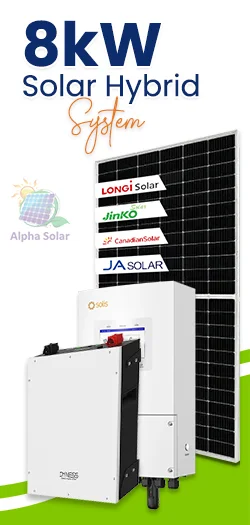
Hybrid systems, however, have become the standard for the 8kW system. By adding a lithium battery bank, you should also consider the Lithium Battery Price in Pakistan to ensure the system fits your budget. You aren’t just saving money; you’re storing sunlight for later use. Instead of selling your excess 2:00 PM energy to the DISCOs for Rs. 12, you save it in your battery and use it at 9:00 PM when the grid would have charged you Rs. 60. This Self-Consumption strategy is how you actually achieve a zero-rupee bill in 2026.
What is the 8kW Solar System Price in Pakistan?
As we are writing this in March 2026, the cost of a Tier-1 8kW system fluctuates based on the quality of the mounting structure and the intelligence of the inverter.
A high-end Hybrid 8kW setup, complete with N-Type Bifacial panels (which catch light from both sides) and a 5kWh to 10kWh Lithium battery, will land you in the range of PKR 1.4 to 1.7 million. If you opt for a pure On-Grid setup without storage, you can shave about 4 to 5 lakhs off that price. But remember: in the current economy, the most expensive system is the one that doesn’t work during a blackout.
What is the best Inverter for an 8kW Solar System?
In the 8kW bracket, you need an Inverter Price in Pakistan that can handle unbalanced loads and has a high DC-to-AC ratio. The market favorites right now are:
- The Nitrox/Inverex Series: Known for being the workhorse of Pakistan, with a service center in almost every major city.
- Solis or Growatt: Excellent if you are sticking to a strictly On-Grid, budget-conscious path.
For the current inverter price in Pakistan — including detailed Growatt inverter price in Pakistan — click here to get complete specs, quotes, and expert comparisons!
How Much Space is required to install an 8kW Solar System?
A modern 8kW system uses roughly 14 to 16 panels. With the new 580W+ high-efficiency modules, you’ll need about 550 to 650 square feet of clear, shadow-free roof space. If you have a 10-marla house, this usually leaves you plenty of room for a small rooftop garden or a sitting area, provided the installer uses a high-rise structure.
What is the Payback period?
The most common myth is that solar takes 7 years to pay back. That’s outdated. With the current electricity tariffs in Pakistan, an 8kW system usually pays for itself in 2.5 to 3.5 years.
You are essentially pre-paying for 25 years of electricity at a massive discount. After the third year, every unit your roof produces is pure profit. In a country with double-digit inflation, there is quite literally no better place to park your savings than on your roof.
Is your roof ready for the 2026 energy shift?
If you’re still unsure about the mounting, whether to go with a standard L2 frame or a customized high-rise structure to save your terrace space, let us know, and we can break down the pros and cons for your specific house type.
Ready to Break Free from Rising Electricity Bills?
Don’t let the new Net Billing policy keep you from saving money. At Alpha Solar, we specialize in designing 8kW systems that prioritize Self-Consumption—meaning you keep the power you produce and stop paying WAPDA’s high rates.
Whether you have a 10-Marla home or a 1-Kanal villa, our team will help you choose the right inverter, the best N-Type panels, and a mounting structure that fits your roof perfectly.
Frequently Asked Questions
Can an 8kW system still bring my bill to zero with the new Net Billing rates?
Yes, but only if you focus on “self-consumption”—using your ACs during the day and storing excess power in batteries for the night, rather than selling it back for cheap.
Is it worth getting a battery for an 8kW system in 2026?
Absolutely; with the grid charging Rs. 60 per unit at night and buying yours for only Rs. 11, storing your own energy is the only way to maximize your savings.
Will an 8kW system run my entire house, including multiple ACs?
It’s the perfect size for a 10-marla home, comfortably running up to three 1.5-ton inverter ACs along with your fridge, water pump, and lights.
How long does it take for the 8kW system to pay for itself?
Even with new policies, the sky-high cost of grid electricity means your system will pay for itself in just 2.5 to 3.5 years.